

About the AI Ethics Board
The AI Ethics Board at CSUCI is charged with guiding the campus community in navigating the ethical landscape of artificial intelligence. The board will not serve as a body for rendering final judgments on ethical questions, but rather as a resource for dialogue, reflection, and informed guidance.
Read the AI Ethics Board Charter and the White Paper: AI-Assisted Grading in Higher Education (PDF, 294KB).
Key Questions:
The following overarching questions place the work of this board within an ethics-focused framework:
- What can ethics contribute to CSUCI’s strategic approach to AI?
- When AI diffusion surfaces or causes complicated issues, can our ethical thinking/implementation be superficial?
- How should CSUCI address AI diffusion?
- What steps do AI users need to take in their decision-making?
Responsibilities
- Support the development of guardrails and guidance
- Establish and promote ethical guidance
- Foster ethical discourse without adjudication
- Develop issue and position statements
Core Principles
Human dignity, fairness, accountability, transparency, privacy, safety, accessibility, academic integrity, human oversight, beneficence, autonomy, justice, common good, equity.
Meet the Board
2025-2026 Co-Chairs
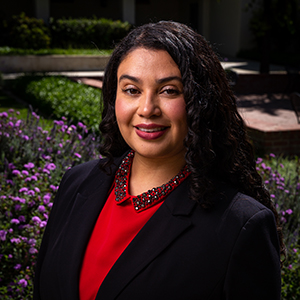 Dr. Cynthia Flores, Professor of Mathematics
Dr. Cynthia Flores is an American Latina Professor of Mathematics at California State University Channel Islands, where she enjoys teaching ordinary and partial differential equations, introducing new technologies to the classroom, supervising undergraduate research, securing external funds for research, and works with community partners in applied math projects. Recently she held an NSF PRIMES Fellowship on the mathematics of intelligence. She has been inspired by several mentors and advisors and aims to continue their shared JEDI work and legacy in creating opportunities within the mathematics and STEM communities.
Dr. Brendan Cline, Assistant Professor of Business
Board Membership
 Jeff Benedetti-Coomber, OER Librarian
Jeff Benedetti-Coomber is the OER Librarian at CSU Channel Islands’ John Spoor Broome
Library, where he leads campus initiatives to expand the use of Open Educational Resources
and advance student-centered, affordable learning. His work focuses on supporting
faculty in adopting, adapting, and modifying OER to better align with course goals
and student needs, as well as guiding departments through sustainable approaches to
course material planning across the university.
In addition to his OER leadership, Jeff’s librarianship centers on strengthening information
literacy and helping students navigate an increasingly complex information landscape.
He is especially interested in the ways generative AI is reshaping how information
is created, evaluated, and used in higher education. His work explores how AI tools
can support learning while preserving critical thinking, transparency, and the human
dimensions of teaching and research.
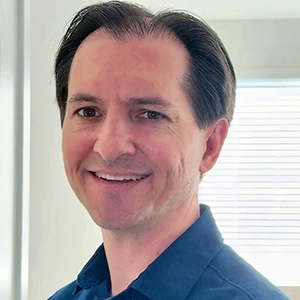 Nicholas Bridgman, Graduate Student - Business Analytics; Graduate Assistant AI Researcher
I am a Master of Science in Business Analytics student, and a Graduate Assistant AI Researcher for Professor Minder Chen. I obtained my undergraduate double-major from U.C. Berkeley in Rhetoric (emphasis in Political Discourse) and Integrative Biology (emphasis in Ecology), as well as an MBA from CSUCI. This background positions me to explore AI ethics from various lenses, such as why AI should incorporate rhetorical and business principles to ensure its responses communicate effectively and appropriately to each individual user. In Fall 2025, I completed an AI Consultant Training Program for Small Business Advisors, which helped me refine applied skills in modeling and replicating an advisor’s reasoning and communication styles in an AI digital twin. Outside of my main career path, I am also an accomplished pianist/composer and published fiction author, and I see both effective and ethically questionable uses for AI in generating music and writing. Overall, these experiences give me practical and theoretical knowledge that inform my views on why AI ethics is important, and on the strategies and frameworks that could help guide its optimal implementation.
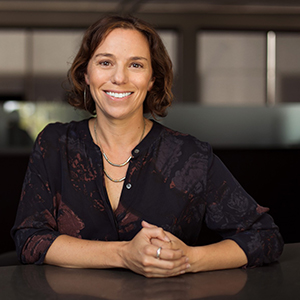 Samantha Calamari, Doctoral Candidate, Learning Strategist, and Inclusive Learning
Design Consultant
Samantha Calamari, Doctoral Candidate, Learning Strategist, and Inclusive Learning
Design Consultant
Samantha Calamari is a learning strategist, consultant, and doctoral candidate specializing
in inclusive learning design for K-12, higher education institutions, and learning
and development organizations. Her doctoral research focuses on leveraging AI and
digital tools to create more accessible and effective learning experiences for diverse
learners. With extensive experience working with companies across industries, she
helps organizations reimagine learning experiences to foster engagement, accessibility,
and equity. As a former Senior Learning Experience Designer at Microsoft and a Content
Producer at LinkedIn Learning, she has developed courses on effective communication
in the workplace, inclusive learning design, and emerging learning technologies. Through
her consulting work, Samantha partners with organizations to design human-centered,
research-driven learning strategies and experiences that support diverse learners.
Website: www.samanthacalamari.com
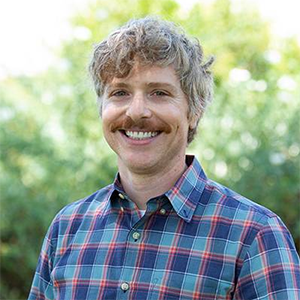 Joshua Gold, Assistant Professor of Health Science
Grounded in the socio-ecological model, my research program operates at the intersection of social-health psychology and public health, exploring the role social and psychological factors play in health promotion and chronic disease prevention. In particular, my studies have focused on obesity across the lifespan and its relationship with psychosocial constructs such as rurality, subjective wellbeing, and weight-based stigmatization. More recently, my research has looked to explore how AI tools may assist community organizations improve healthcare delivery.
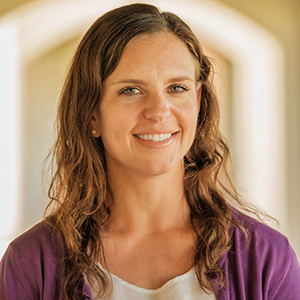 Lorna Gonzalez, Assistant Vice President for Digital Learning
Dr. Gonzalez serves as Assistant Vice President for Digital Learning, where she leads CSUCI's Teaching and Learning Innovations Team. She is also affiliate faculty in CSUCI's Ed.D. program, where she teaches courses on leadership and emerging technologies. Her research explores questions about how to demystify “ways of thinking and doing” (literate practices) with emergent technologies, genres, and cultural contexts, particularly within higher education.
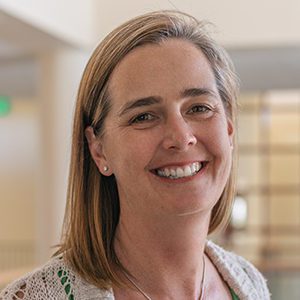 Jill Leafstedt, Dean of Extended University and Digital Learning
Jill Leafstedt is the Dean of Extended University and Digital Learning, where she leads online learning, professional and continuing education, and partnerships focused on access and workforce-aligned pathways. With more than 25 years of experience across K–12, higher education, and academic technology, she focuses on using technology and AI thoughtfully to support student and faculty success. She brings a practitioner’s perspective on AI ethics, focused on the impact of emerging technologies on students, faculty, and staff.
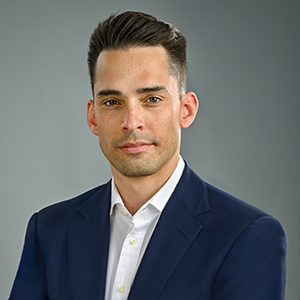 Daniel Orona, MBA Candidate
Daniel is an MBA candidate at CSU Channel Islands, expected to graduate in May 2026,
with an undergraduate degree in Computer Science. His journey into AI began during
his initial studies in molecular biology, where he recognized machine learning's transformative
potential in genetics research, a realization that led him to pivot to computer science
to develop a foundational understanding of AI.
Daniel brings experience from his time as a Technical Product Marketing Manager at
NVIDIA, where he contributed to the Blackwell Platform launch, helping accelerate
the adoption of cutting-edge AI infrastructure across industries. On campus, he founded
the CSUCI AI Club to foster peer learning and exploration of emerging technologies.
Daniel views AI as the defining innovation of our time and is driven by a commitment
to helping others realize its promise.
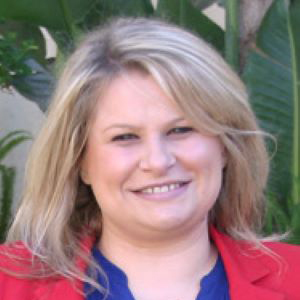 Dottie Patten, Board Sponsor - Special Assistant to the President & Associate Vice
President for Organizational Effectiveness
Dottie Patten, Board Sponsor - Special Assistant to the President & Associate Vice
President for Organizational Effectiveness
Dorothy (Dottie) Patten, Ed.D., is a higher-education administrator with extensive experience in organizational effectiveness, policy development, and executive operations. She currently serves as Special Assistant to the President and Associate Vice President for Organizational Effectiveness at CSU Channel Islands, where she focuses on strengthening institutional processes, supporting ethical and strategic decision-making, and advancing cross-divisional initiatives, including the university’s emerging work in artificial intelligence. Her background spans student success analytics, program review, governance, audit oversight, budget operations, and crisis response. She brings a systems-minded, equity-driven approach to complex challenges and is committed to fostering responsible, transparent innovation in higher education.
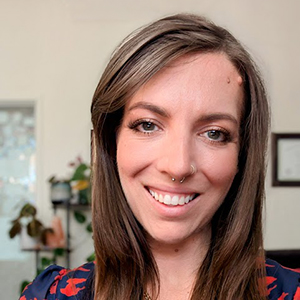 Dani Rae, Associate Director for Student Conduct & CARE
Dani Rae serves as the Associate Director for Student Conduct & CARE at CSU Channel Islands, where she has worked in the Dean of Students office since 2019. In her role, Dani supports students navigating academic and behavioral challenges by helping them strengthen their critical thinking and decision-making skills. She collaborates closely with campus partners and remains attentive to the cultural and technological developments that shape students’ learning environments and well-being.
Dani’s work regularly intersects with emerging technologies, including the evolving use of artificial intelligence in student life and conduct processes. Her interests include ensuring that technological tools are understood within their broader social and ethical contexts and that students are equipped to engage with them responsibly. Dani looks forward to contributing her student-centered perspective to the AI Ethics Board and supporting conversations that promote thoughtful, equitable practices across the CSUCI community.
Asha Ramachandra, Director of IT Strategy
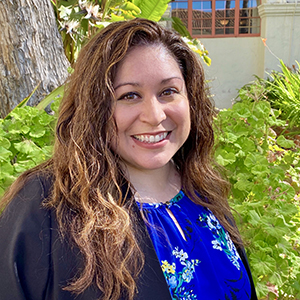 Monica Rivas, Director of Academic Advising
Monica serves as the Director of Academic Advising and is a proud first-generation college graduate from a working-class immigrant family in Oxnard. She is dedicated to expanding educational access and supporting the success of all students. Monica earned her Bachelor of Arts in Sociology from UC Santa Barbara while balancing life as a student parent to two young daughters. She later completed a Master of Science in Counseling and Guidance at California Lutheran University and a Doctor of Education in Educational Leadership at UCLA. In addition to her role in advising, Monica teaches in the University Experience program, serves as Parliamentarian for the Chicana/e/o/x Latina/e/o/x Faculty Staff Association, and advises Ballet Folklórico de CSUCI. She is also a proud parent of two CSUCI alumni. She brings a strong equity and student-centered perspective to her service on the AI Ethics Board, advocating for responsible, inclusive, and transparent uses of emerging technologies in higher education.
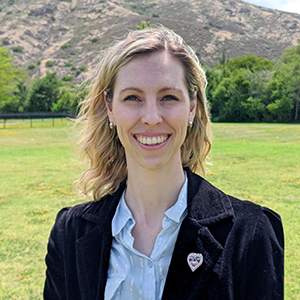 Melissa Soenke, Faculty Director of Assessment and Program Review and Professor of
Psychology
Melissa Soenke, Faculty Director of Assessment and Program Review and Professor of
Psychology
Dr. Melissa Soenke is the Faculty Director of Assessment and Program Review and a Professor of Psychology at California State University Channel Islands. She is a social psychologist studying experimental existential psychology, stress, coping, psychophysiology, health, and well-being. She earned her B.A. from American University and her Ph.D. in Social Psychology from the University of Arizona. She has been a faculty member at CI since 2015.
In her role as Faculty Director of Assessment and Program Review, Dr. Soenke leads institution-wide efforts to strengthen assessment practices, oversees academic program review, and integrates data-driven continuous improvement strategies across academic units. She is currently participating in the WSCUC Accreditation Leadership Academy, where questions about AI and assessment are explored, including how to evaluate authentic student learning and thoughtfully incorporate AI tools into assessment processes.
She previously served as the 2023-2024 President’s Faculty Fellow, working on a project entitled Reengaging Faculty and Staff to Reenergize our Campus, aimed at assessing and combating burnout and enhancing well-being among university faculty and staff.
Across her administrative, research, and teaching roles, Dr. Soenke is committed to exploring and promoting ethical, equitable, and human-centered approaches to emerging technologies in higher education.
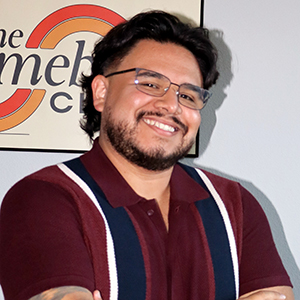 Allan Yanez, Educational Opportunity Program Counselor
I am a proud first-generation college graduate and alumni of CSU Channel Islands, where I earned my Bachelor of Science in Health Science with a minor in Psychology. Driven by a passion for student development and equity in education, I continued my academic journey at CSU Northridge, earning a Master’s degree in Counseling with an option in College Counseling and Student Services.
Currently, I serve as a counselor with the Educational Opportunity Program (EOP) in the Student Success Center, where my work centers on making college success accessible, navigable, and sustainable for all students; particularly those from historically underrepresented and first-generation backgrounds. I believe higher education should not be a gatekept space, but one rooted in support, mentorship, and intentional guidance.
I believe every student comes in with potential, even if they don’t see it yet. I enjoy dreaming with students about what’s possible by exploring goals, imagining futures, and helping them turn ideas into something real and attainable. Whether we’re navigating challenges, building confidence, or mapping out next steps, my role is to support students as they grow into who they want to become. I aim to create a space where students feel encouraged to think bigger, take ownership of their journey, and move forward with clarity and purpose.
Additional Information
Sponsored by: Office of the President and Division of Academic Affairs
Administrative Sponsor: Dr. Jill Leafstedt, Dean of Extended University & Digital Learning
Board Chairs for 2025-2026: Dr. Cynthia Flores (Mathematics) & Dr. Brendan Cline (Business)
AI Implementation Team: Dr. Lorna Gonzalez, Ms. Asha Ramachandra, & Dr. Dottie Patten